Your guide
Trained to hold both the body and the story.
Wild Heart began with a simple conviction: that lasting healing has to include the body. Here's the person, and the philosophy, behind the practice.
Her story
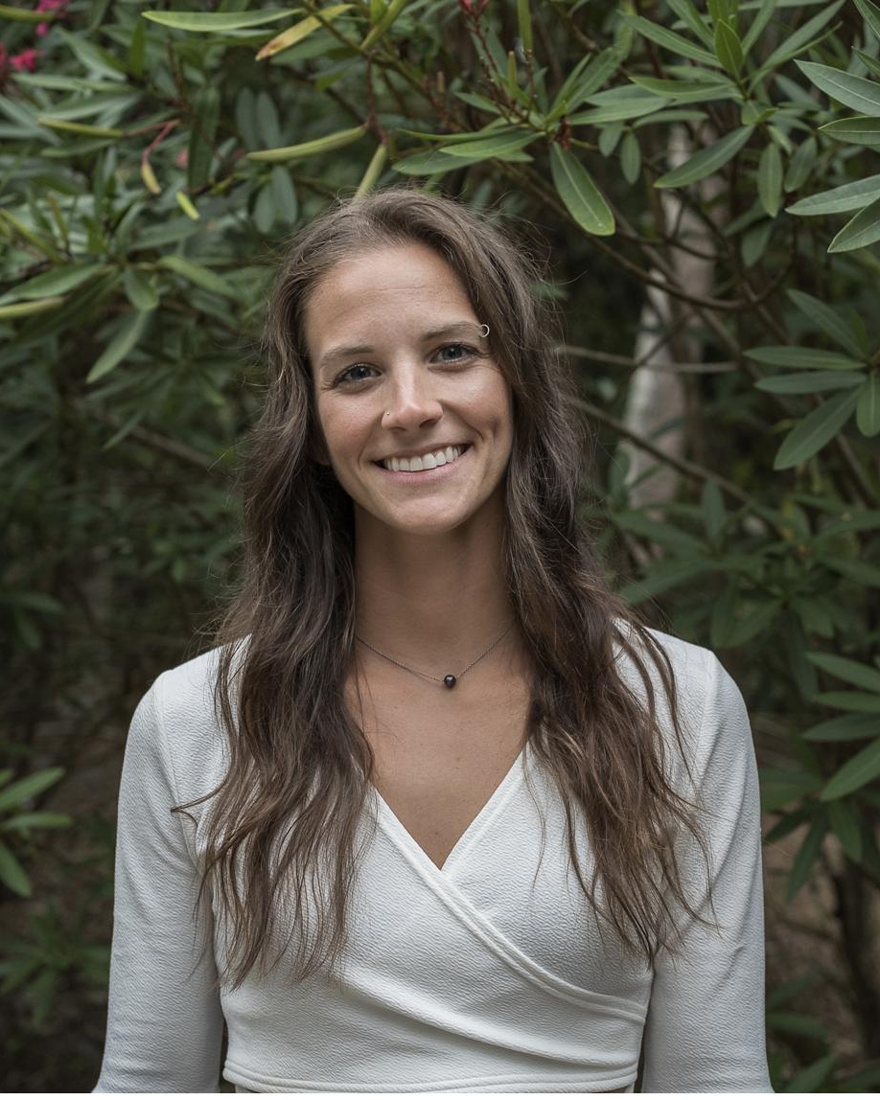
Hannah Rae
For years, I did what I thought I was supposed to do to take care of myself. I went to therapy, studied psychology and counseling, learned how to understand my thoughts and emotions, and developed the ability to keep myself on track enough to manage my day-to-day responsibilities. And yet, even with all of that knowledge and support, I continued to struggle with depression and chronic pain.
I had this persistent gut feeling that the two were connected; that maybe what I was experiencing emotionally and mentally couldn’t be separated from what was happening in my body. I saw doctors and other health professionals, had countless tests and evaluations, and spent years trying to understand why I didn’t feel well. But I never seemed to receive any significant answers.
After finishing graduate school, I recognized that I still had some work to do on myself and decided to allow myself a break from planning what was next, for perhaps the first time in my adult life.
I continued working part-time and gave myself permission to slow down, spend time healing, and simply allow space to find out what was next for me. During that time, I began practicing yoga, initially with the very practical goal of helping my chronic back pain. I gravitated especially toward Yin Yoga and began spending more time slowing down, becoming aware of my body, and learning how to actually listen to it.
To my surprise, Yin Yoga didn’t just help my back. It began changing the way I felt mentally and emotionally, too.
The more I practiced, the more curious I became about why it was helping. I began diving into the research behind yoga, mindfulness, breathwork, the nervous system, and the mind-body connection. For the first time, I began to understand something I had intuitively sensed for years: healing isn’t simply a matter of understanding what’s happening in your mind. The body is part of the conversation, too.
That realization became a turning point for me.
I traveled to India to deepen my practice and train as a Yin Yoga Therapy instructor, while continuing to draw from my background in clinical mental health counseling. I began exploring how these two worlds could work together—not as a replacement for mental health care or medical treatment, but as another way of understanding ourselves and participating more actively in our own healing.
That is the foundation of Wild Heart Yoga Holistic Healing.
My approach combines principles of counseling, Yin Yoga Therapy, mindfulness, breathwork, and somatic awareness to help people develop a deeper relationship with their own bodies, minds, and emotions. I don’t believe there is one formula for healing, since everybody and every body is different.
I see myself not as someone who has all the answers, but as a guide alongside you as you learn to better understand yourself and take ownership of the parts of your healing that are within your control.
Ultimately, my hope is to help you develop the awareness, skills, and trust to become an active participant in your own healing journey—so that healing isn’t something you simply seek from someone else, but something you learn how to cultivate within yourself.
— Hannah Rae
Creator & Instructor of Wild Heart Yoga Holistic Healing
MA, Clinical Mental Health Counseling
Certified Yin Yoga Therapy Instructor
About Yin Yoga
Long holds. Deep tissue. Real change.
Yin Yoga uses long-held poses, breathwork, and mindfulness to strengthen and release the deepest layers of connective tissue and fascia. This matters for preventing injury as we age — and because so many nerve pathways end in the fascia, many of us physically store emotional energy in the body, where it can surface as chronic pain, illness, or mental-health struggles.
Because it works through the mind-body connection, Yin is therapeutic by nature and a wonderful complement to traditional talk therapy. For many, the practice even transcends into a rich experience of spiritual connectedness and growth.
A few of its benefits
What she believes
Talk is powerful. So is stillness.
The body remembers
Emotional energy can be stored physically. Working with fascia and breath gives it somewhere to go.
Safety comes first
Nothing is forced. The pace is yours, and the space is built to feel safe before anything else.
You lead your healing
The work is learning to tap into your own internal regulators and take leadership back over your mind, emotions, and nervous system. The goal isn't to work with me indefinitely — it's to be empowered to own your healing journey yourself.
Credentials
Qualified, and genuinely present.
-
Master of Arts, Clinical Mental Health Counseling
Graduate-level training in counseling, mindfulness, and the psychology of trauma and healing.
-
Certified Yin Yoga Therapy Instructor
Trained in India in the therapeutic application of Yin — fascia, meridians, and long-held postures.
-
B.S. in Psychology
The academic foundation beneath a practice that's every bit as personal as it is professional.